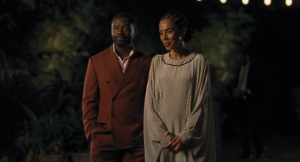
Starring Ṣọpẹ́ Dìrísù, My Father’s Shadow is a moving award-winning period drama set in Nigeria which follows the day in the life of a father and his two sons during the pivotal day in 1993 where the Nigeria general election was annulled.
Directed by Akinola Davies Jr. who co-wrote the story with his brother Wale Davies, My Father’s Shadow captures, through a child’s eyes, a moment, indelibly imprinted in the minds of a generation of Nigerians, when everything was on the verge of positive change… until it was not. It was announced that the 1993 election was annulled and popular candidate MKO Abiola would not become the Nigerian president. My Father’s Shadow exposes the mood of betrayal, anxiety, and unrest that followed for many citizens. The story is told, uniquely through the eyes of two young boys during a memorable day with their estranged father.
What we loved about Coriolanus, the RSC production
The film has already been acknowledged and nominated at a number of international film awards. These include the UK submission for best international feature film at the Academy Awards and nominations at this year’s BAFTA for outstanding debut by a British writer, director or producer and wins for best director. My Father’s Shadow is a project close to the brothers’ hearts. Wale and Akinola have described the film as being semi-autobiographical, acknowledging that the script is loosely based on their childhood and father.
So, what’s the film really about?
Setting the scene – Nigeria in 1993
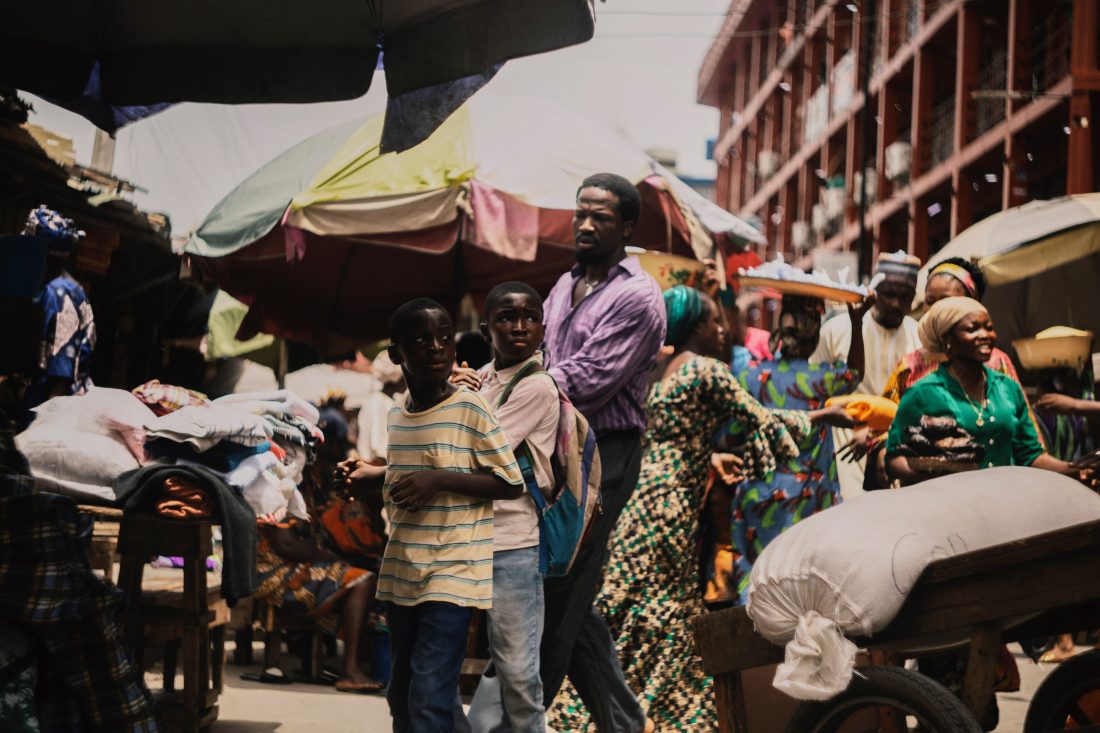
Set over the course of a single day in Lagos during the 1993 Nigerian election, the film follows a father, Folarin played by British Nigerian Ṣọpẹ́ Dìrísù (Gang’s of London, Mr Malcolm’s List, His House), and his two estranged young sons Remi and Akin played by Godwin Egbo and Chibuike Marvellous Egbo (in their first film), as they travel through the city while political unrest threatens their journey home.
It’s important to note that as a relatively young nation in 1993, Nigeria had already suffered political unrest and military rule since its 1960 Independence from Great Britain. Much was riding on the 1993 election, with Moshood Abiola, who is also known as MKO, as the favourite to win. For many, he represented a beacon of hope, change and revolution. Election day saw citizens come out in droves to vote for him and it was considered he had a landslide victory against the then military ruler, General Ibrahim Babangida. However, this hope was taken away as the election was annulled, leading to a series of violent protests.
“… this hope was taken away as the election was annulled…”
My Father’s Shadow is set on the day the election was annulled. Speaking about his background research before filming began, Ṣọpẹ́ said: “I did a lot of research about that period of history in Nigeria and the turmoil that was ongoing. I think the country truly believed that this was the point at which Nigerian Independence was going to be something the people could celebrate and uphold, and that the country was finally ready to stand on its own two feet. A lot of the ill feeling that still persists today can be anchored in that moment. It’s wonderful that we’re lifting a lid on it a little bit.”
A capsule in time – Lagos in 1993
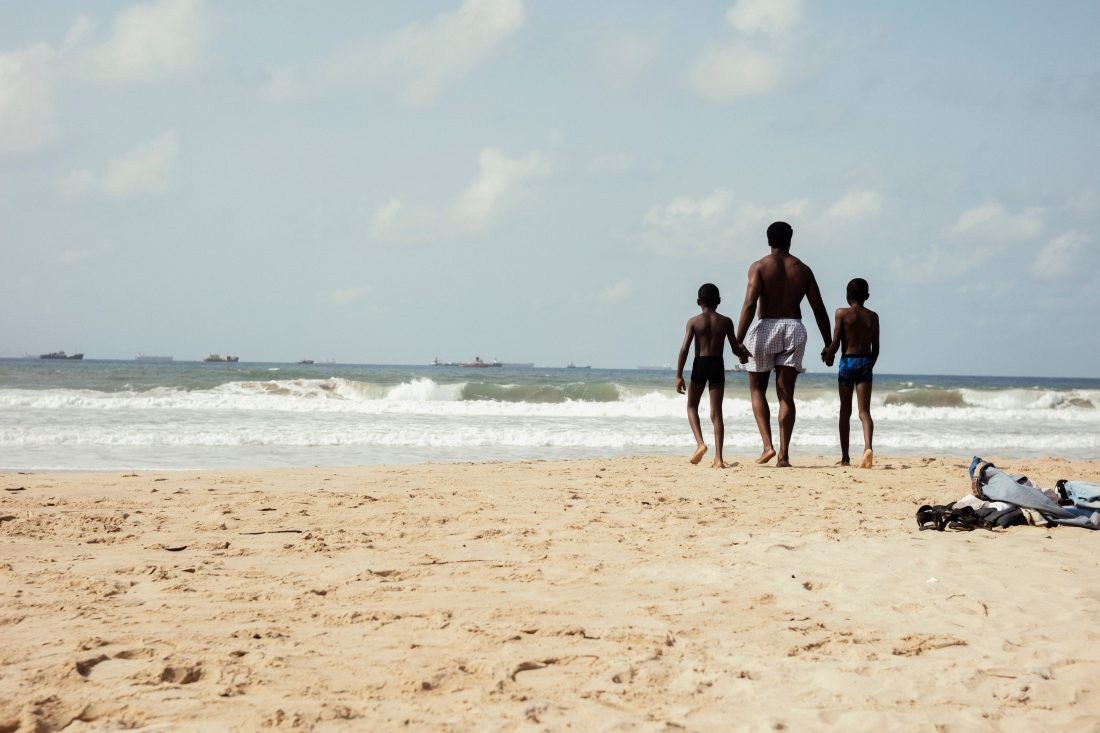
With careful attention to presenting details of the mid-90s period, the film faithfully presents as a love letter to 1993 Lagos. One of the film’s producers, Funmbi Ogunbanwo describes: “The level of detail in which Lagos is described – it’s a character in itself. Being from Lagos and spending much of my life here, it was really amazing to see someone articulate the experience that we’ve had as children and put that into the page.”
“I actually wanted to create a love letter to the place”
Wale was very clear that they needed to film in the city. He said: “I didn’t want to transpose a story from elsewhere; I actually wanted to create a love letter to the place. In the film, Lagos is a living, breathing character with its own detail. Lagos is a very energetic city, which we wanted to represent on screen.”
The archetypal Nigerian man and father
At its heart, My Father’s Shadow is a “complex story about memory, grief and absence, as well as a simple story about a father and his sons spending the day together.” Akinola and Wale lost their father when they were very young, so much of the background of making the film, and the story that it tells, is inspired by this loss and how it has affected them.
Ṣọpẹ́ felt the importance of what the film. He said: “To tell a story as tender, beautiful and considered as this one, is an opportunity that not a lot of actors get in their careers.”
Akinola describes Folarin as the archetypal Nigerian man and father. He said: “Folarin is someone who is charismatic and charming but who is also hardworking and has a sense of obligation to his family. Folarin presents this very strong exterior, but he is probably very soft inside and very emotional. He’s not a direct portrayal of our father, but he is someone that we wanted to serve as a reflection of someone who could have been.”
“Folarin is someone who is charismatic and charming…”
“Over the course of the film, Folarin is trying to perform masculinity in a certain way but keeps meeting these obstacles. He’s trying to perform this character in front of his children, who really don’t care and are just excited to be spending the day with him.”
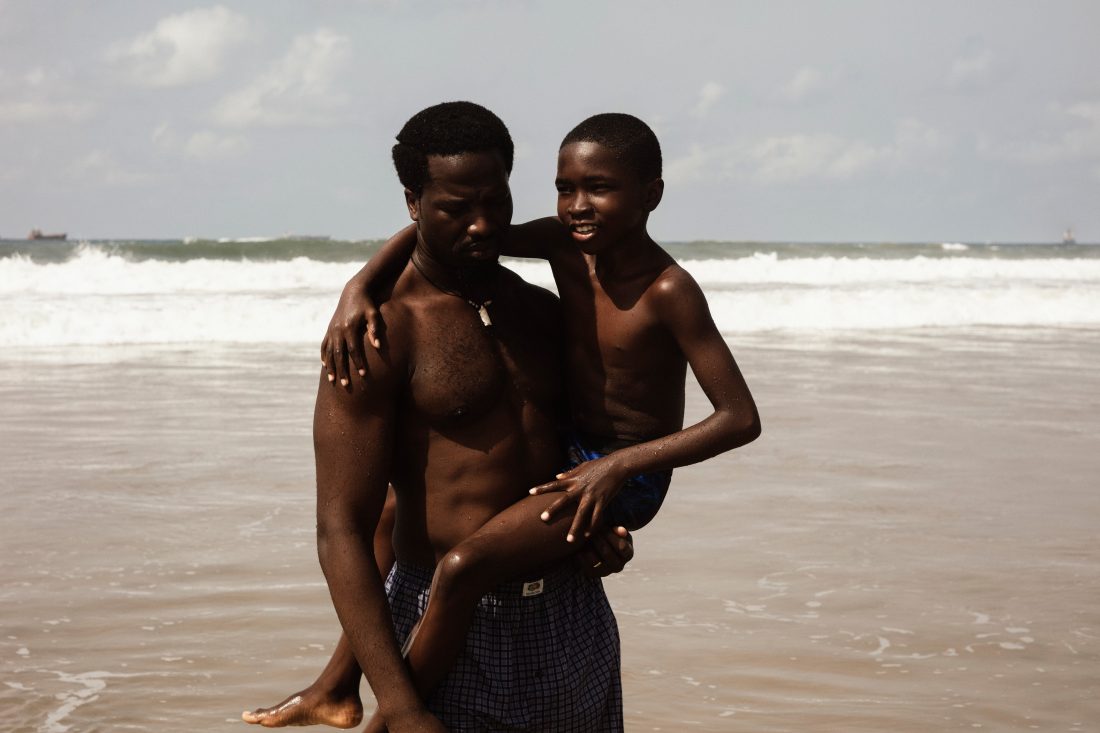
Wale thinks that Folarin is a character who will be very recognisable to a lot of people that grew up in Nigeria, and Africa as a whole: He said: “Folarin’s primary role within the context of family is breadwinner. Folarin has accepted that sense of responsibility and has made that, in his mind, the primary purpose of his life as a father and husband. What we’re exploring in this film is the balance of being provider but also being able to share time with your family and watching them grow.”
Homecoming: A labour of love
Ṣọpẹ́ was grateful to be able to acquaint himself with some of the places in the film where his family has history: “I loved connecting with parts of myself. A lot of the filming locations are important to my family – my dad was from Lagos and my mum was from Ibadan, so it feels like I have been walking in ancestral footsteps. If I am not blessed to make another film after this one, I think I could say that I peaked here. That’s how much I love this story and have loved this experience.”
Introducing the next generation
To find suitable child actors to play Remi and Akin, the production team looked all over Nigeria. Wale said: “We cast a wide net and were able to get a lot of amazingly talented children who came to audition for the roles.”
Akinola remembers seeing Godwin and Chibuike for the first time and, without knowing that they were brothers in real life, knew that they were the perfect fit. “It’s quite a lot for these two boys to carry the film – it’s asking a lot. But we rehearsed and workshopped, and after that, we knew they would be our leads.”
With the boys being brothers in real life, they were able to bring a natural playfulness and intimacy to their roles. One of the film’s producers, Rachel Dargavel who also produced BAFTA nominated short Lizard, commented: “The spirit of that brotherly relationship means there is a natural intimacy between them, they feel very comfortable. The way they hold hands, the way they look at each other. It is absolutely a blessing because they were very natural with each other.”
“The memories that pain you when people go are the same memories that will comfort you later”
Final thoughts
A poignant line in the film spoken by Folarin states: “The memories that pain you when people go are the same memories that will comfort you later”. Anyone who has experienced loss of a loved one will feel these words keenly. We thoroughly recommend you go see My Father’s Shadow. It is a beautifully emotional story of paternal love and nostalgia. Ṣọpẹ́ said: “I would hope it might encourage people to give their parents, or siblings, or family members, a ring… [] if it encourages us to connect a bit more with people that we love and also our own selves, then I would consider it a success.”
Watch the My Father’s Shadow trailer below
My Father’s Shadow is in cinemas in UK and Ireland from 6 February 2026.